
What the snow taught me about ADHD overwhelm
Updated: Feb 23
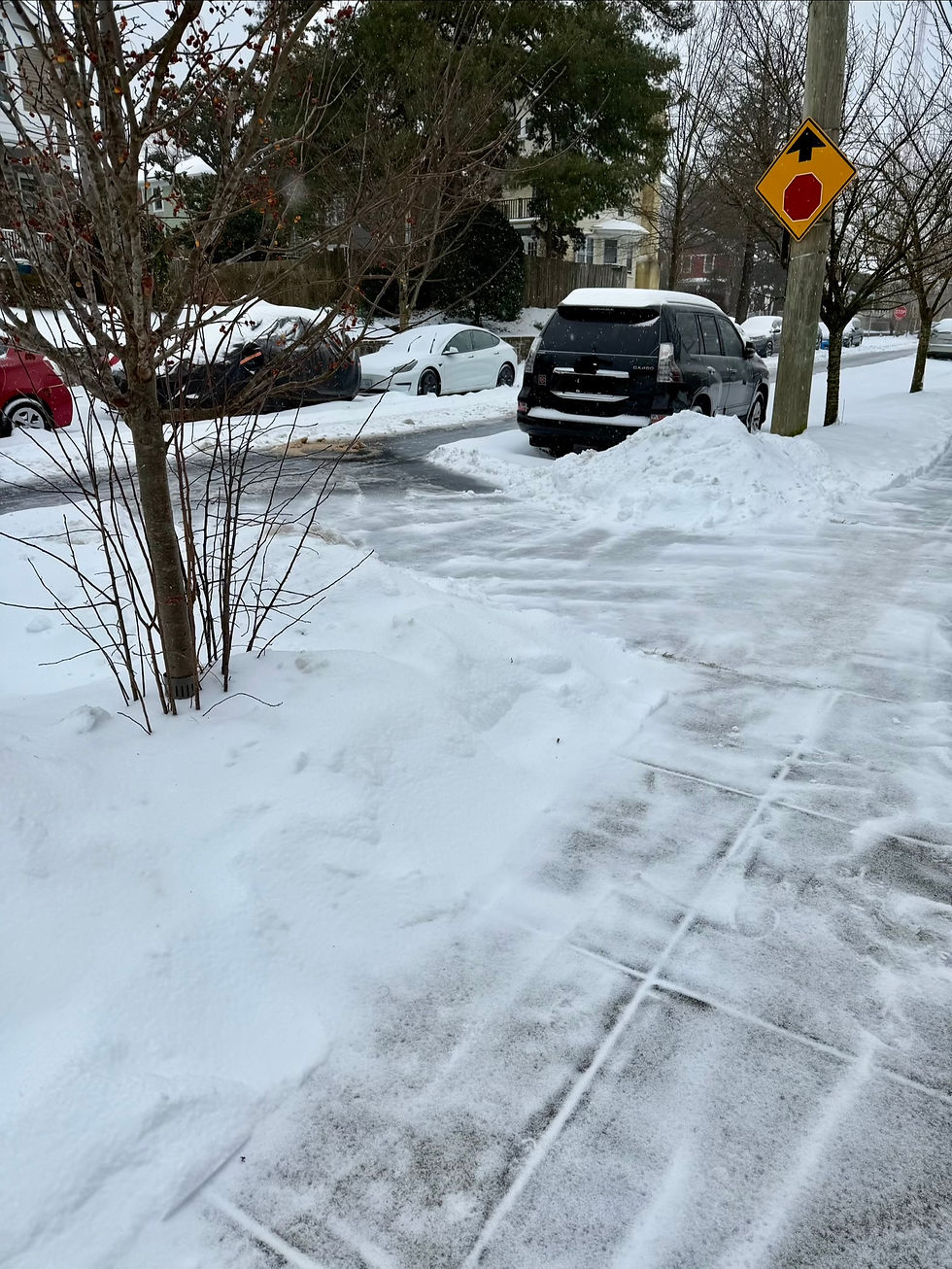
Two days later, I’m still thinking about the snow.
Here in DC, we were hit with a wintry mix of snow and sleet — the kind that keeps changing the rules. That morning, I headed outside early, shovel in hand, knowing it would be better to start before things got heavier.
I was out there for over two hours the first time. It was hard work, but steady. I cleared the sidewalk, worked through the driveway, and felt surprisingly okay about the fact that some of it would likely get covered up again.
I remember thinking: Clearing this now still matters. Even if it gets messy later, this is setting me up for an easier next round.
By then, there were another four inches of sleet sitting on top of all the work I’d already done. The snow was heavier. Wetter. Stickier. And within about ten minutes, as I started shoveling from the driveway into the middle of the street, I felt a sudden wave of overwhelm hit. The kind that comes fast and feels total.
My arms hurt. My back hurt. The snow felt impossibly heavy. And for a few minutes, everything inside me said: I can’t do this.
I actually called my husband, who's away on a work trip in Halifax, Nova Scotia. (So at least he's somewhere cold, too!)
I told him how overwhelmed I felt. I cried a little. I said out loud, This just feels like too much. He told me, "Just go in. It will be OK."
And then, something important happened.
After talking with him for a few minutes, after letting myself feel what I was feeling instead of pushing it down or arguing with it, after experiencing the relief of the permission to go inside, my nervous system settled. Not instantly. Not magically. But enough.
I didn’t go back inside.
I stayed out there for another hour-plus.
I kept shoveling. I worked hard. I finished what I needed to finish. And when I was finally done, I felt tired and sore. But also grounded, capable, and genuinely accomplished.
Looking back now, what stands out to me isn’t the overwhelm itself. It’s how workable it turned out to be.
That moment has stayed with me because it’s such a clear example of something I see all the time with ADHD — and experience myself:
Overwhelm doesn’t mean you’re incapable. It means your nervous system has hit its limit. But only temporarily.
During that second round, the task felt impossible for a few minutes. Not because it was impossible, but because my system was flooded. My capacity was exceeded. And in that moment, what helped wasn’t grit or positive self-talk or pushing harder.
What helped was regulation.
I didn’t make the snow lighter. I didn’t suddenly enjoy shoveling. I didn’t make the task easy. What I did was give my nervous system what it needed so I could stay present with something hard.
That distinction matters.
Nervous system regulation doesn’t mean you never feel overwhelmed. It doesn’t mean you stay calm all the time. And it definitely doesn’t mean you don’t have moments where things feel like too much.
It means you can have a moment — and then come back.
You can feel overwhelmed, name it, get support, and still keep going.
This is where ADHD is so often misunderstood. Many people think the goal is to eliminate overwhelm entirely, or to power through it without flinching. But that’s not how real life works — and it’s not how nervous systems work either.
Sometimes the most productive thing you can do is pause, cry a little, talk it through, and let your system reset just enough to take the next step.
That day, I didn’t avoid the work. I didn’t force myself through it, either.
I had a moment. Then I regulated. Then I kept going.
Two days later, that feels like the real takeaway.
Progress doesn’t require perfection. It requires capacity. And capacity can be rebuilt — even mid-shovel.
Reflection question:
Where in your life might a small pause or moment of regulation help you build enough capacity to keep going?


Comments